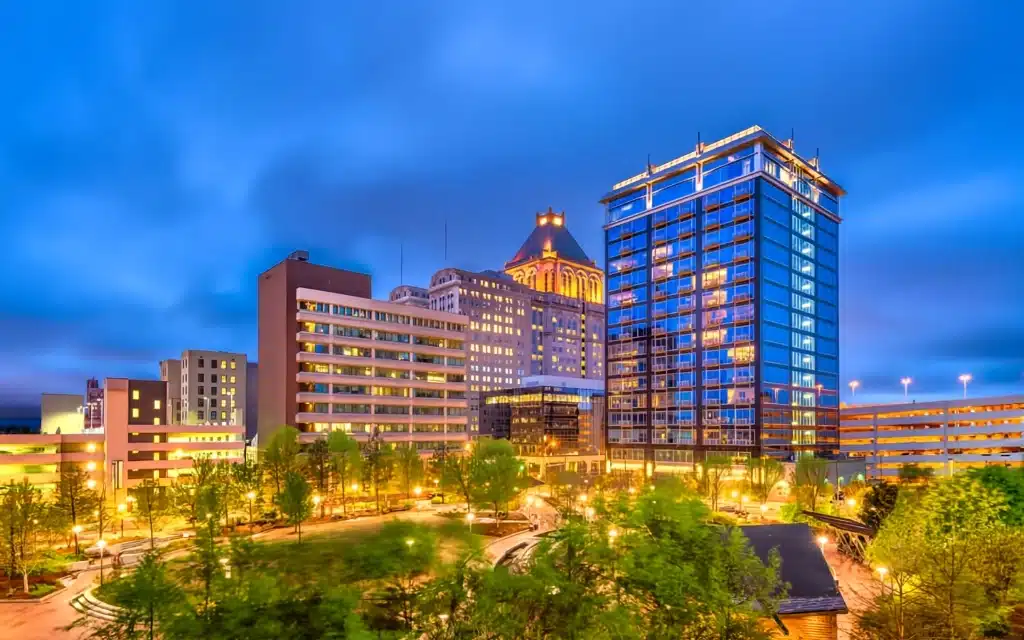
Across Los Angeles, Seattle, the San Francisco Bay Area, San Diego, and Portland, a growing number of multifamily operators are replacing traditional in-house staffing arrangements with something fundamentally different: outsourced, hospitality-driven teams trained to treat every resident interaction not as a task to be completed, but as an experience to be delivered.
The shift is driven by converging pressures: a West Coast multifamily staffing crisis that shows no sign of easing, rising operational costs, and a resident base that now expects something closer to five-star hotel service than a transactional apartment building experience.
Quick Answer: What’s the Difference Between Transactional Staffing and Hospitality-Driven Teams?
Transactional staffing fills a function, a body at the front desk, a crew that cleans at night, a patrol officer making rounds. Hospitality-driven teams fulfill an experience. Every staff member, regardless of role, is hired for temperament, trained in service culture, and held accountable for how residents feel after each interaction, not just whether the task was completed.

The West Coast Staffing Crisis Is Reshaping How Properties Operate
West Coast multifamily operators face a staffing environment unlike anywhere else in the country. Labor shortages that emerged post-pandemic have hardened into structural challenges: high worker expectations around flexibility and benefits, elevated labor costs driven by state and local minimum wage floors, and a fundamental mismatch between the demands of on-site residential roles and what candidates now expect from an employer.
Operational expenses continue to rise, labor shortages persist across the industry, insurance premiums remain elevated, and materials inflation continues to impact maintenance budgets. All of these factors combined mean that multifamily property owners are increasingly expecting property managers to do more with less.
The consequence is a cycle most property managers know well: positions go unfilled for weeks, underqualified candidates are hired out of necessity, turnover follows quickly, and the cost of constant rehiring compounds the very budget pressures that made staffing difficult in the first place. Residents experience the churn as inconsistency, different faces at the front desk, cleaning crews who don’t know the property, courtesy officers who have no relationship with the community they serve.
According to a myQ Community survey, overall friendliness when interacting with staff ranks as the number one resident priority. In a staffing model defined by turnover and task completion, that priority goes unmet, and lease renewals reflect it.
What “Transactional Staffing” Actually Costs, Beyond the Payroll Line
The financial case for rethinking traditional staffing goes well beyond hourly wages. The true cost of a transactional staffing model is distributed across recruiting, onboarding, coverage gaps, management overhead, and the downstream impact on resident satisfaction.
Replacing a single employee costs an estimated 30–50% of that role’s annual salary, and in West Coast markets, where wages are significantly above the national average, that math is punishing. A front desk associate turning over twice in a year, a janitorial crew cycling through different personnel every few months, a courtesy officer who never builds familiarity with the community, none of these are line items that show up cleanly on a budget report, but all of them erode the resident experience in ways that eventually surface in renewals, reviews, and occupancy.
The reputational cost compounds the financial one. Residents who feel the building’s service is inconsistent or indifferent don’t just fail to renew, they say so publicly. In an era when prospective residents read Google and Yelp reviews before scheduling a tour, a pattern of service complaints follows a property for years and directly suppresses leasing velocity.
Outsourced, hospitality-driven programs address both problems simultaneously: they eliminate the internal HR burden of recruiting and retaining service staff, and they deliver a trained, supervised, accountable team whose continuity and culture are managed by the provider, not the property.

Los Angeles: When Retention Becomes the Only Strategy
In Q1 2026, the Los Angeles multifamily market reflects modest shifts across fundamentals, with vacancy ticking up to 5.6% and rent levels holding flat at $2,292 per unit per month, unchanged year-over-year. For operators who spent the past several years competing on new amenities and concessions, the market’s message in 2026 is unambiguous: retention is the strategy.
Newer properties, especially those in lease-up, face heightened competitive pressure, with operators prioritizing tenant retention to limit potential turnover. Since 2022, projects totaling 32,000 units have come online across Los Angeles, yet vacancy has only risen by 100 basis points, a testament to the depth of renter demand in one of the country’s most supply-constrained coastal markets. But that resilience doesn’t mean retention is easy. It means the competition for renewing residents is fierce, and the margin between a community that earns loyalty and one that loses it often comes down to service quality.
Many Los Angeles multifamily owners are doubling down on preserving occupancy even as rental demand increases, with controlling costs and prioritizing proactive maintenance taking a front seat to expansion. In that operating environment, the staffing model is no longer a back-office decision. It is a core component of the resident value proposition.
Los Angeles also presents a specific operational challenge that makes transactional staffing particularly vulnerable: the market’s geographic and demographic diversity. A luxury high-rise in Downtown LA, a mid-rise in West Hollywood, a garden-style community in Torrance, and a mixed-use development in Culver City each serve a meaningfully different resident profile with different service expectations. A hospitality-driven staffing partner that customizes service culture and delivery to each community’s specific identity outperforms a one-size-fits-all in-house model every time, because residents don’t compare their building to a staffing benchmark. They compare it to the best experience they’ve ever had.
San Francisco Bay Area: High-Income Residents, Uncompromising Expectations
The San Francisco Bay Area presents a different set of pressures, and a different kind of resident. San Francisco’s multifamily market is expected to stabilize in 2026 after a strong 2025, which saw a triple-digit basis-point drop in vacancy. The city’s expanding role in AI and tech innovation continues to generate high-paying jobs and reinforce renter demand.
Rent growth has been strongest in downtown submarkets such as SoMa and Mission Bay, both of which posted year-over-year gains exceeding 10% in late 2025, driven by higher-income renter demand for Class A properties. These are not residents who accept average. They are tech professionals, AI researchers, and senior executives paying $3,000 or more per month for a home they chose precisely because it promised something beyond a standard apartment experience.
For property managers operating Class A assets in the Bay Area, the hospitality-driven staffing model isn’t aspirational, it’s the baseline expectation of the resident paying that rent. A concierge who doesn’t know their name. A building lobby that looks uncared for by midday. A courtesy patrol officer who has never introduced themselves. Each of these micro-failures registers as a breach of the implied promise that justified the rent.
High-credit tenants in San Francisco are increasingly selective, with renter preferences emphasizing presentation and pricing, and smaller, well-designed units with attentive management outperforming larger, outdated ones. That selectivity extends to service. The Bay Area resident in 2026 is choosing between Class A communities that look almost identical on paper. The differentiator, the thing that generates word-of-mouth referrals and lease renewals without concessions, is how the building feels to live in every day.
Multifamily units under construction across the Bay Area stood at 7,375 in Q3 2025, the second-lowest figure since 2011, meaning supply relief isn’t coming, and existing properties won’t be bailed out by a softening market. The communities that retain their resident base will do so through operational excellence and service quality. Outsourced, hospitality-driven teams are how the best Bay Area operators are delivering both.

The Four Roles That Define the Resident Experience, and How Hospitality-Driven Teams Transform Each One
Front Desk Concierge: From Gatekeeper to Community Hub
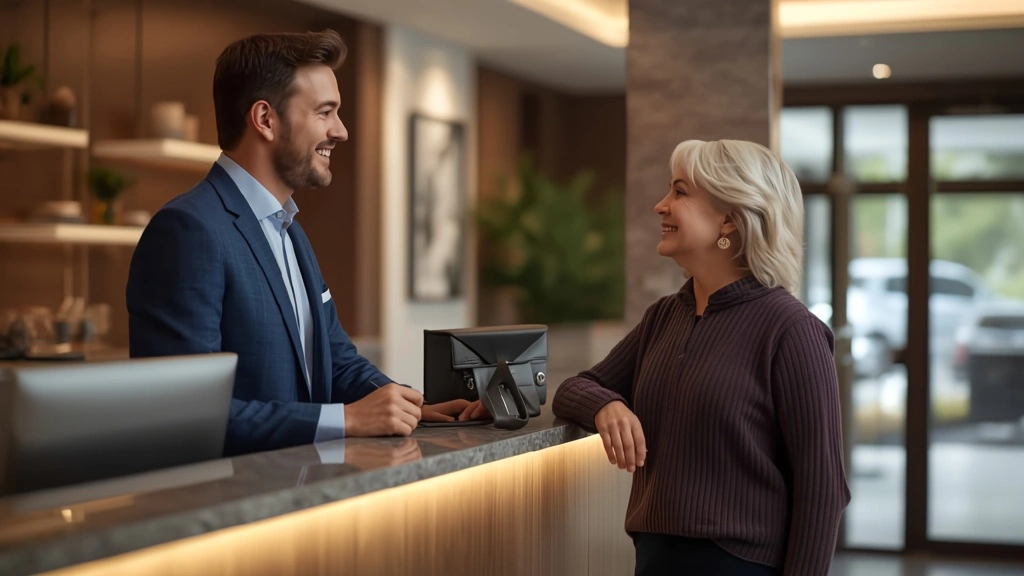
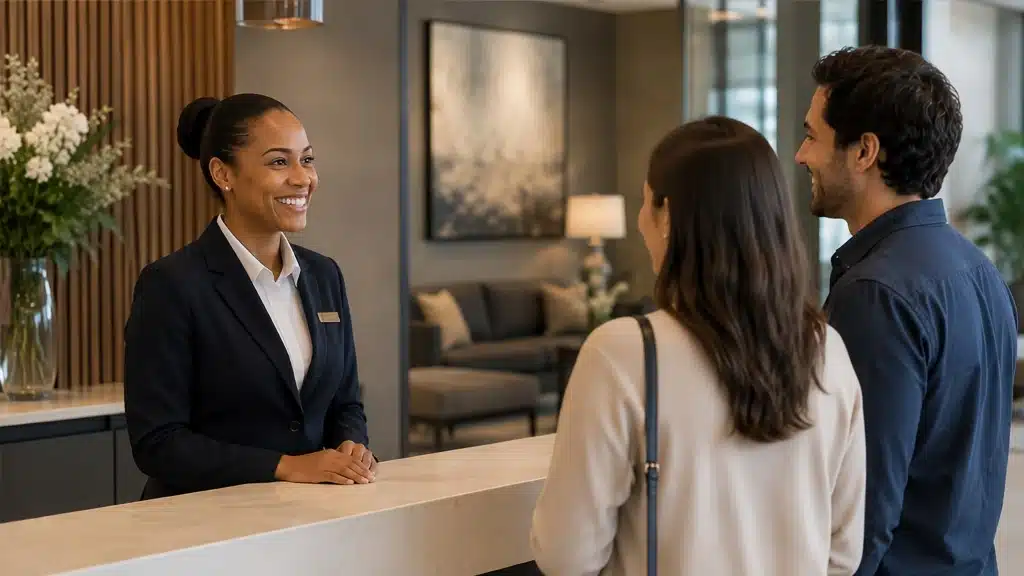
In the transactional model, the front desk exists to manage access and field calls. In the hospitality-driven model, the concierge is the face of the community, greeting residents by name, coordinating amenity reservations, handling vendor referrals, facilitating HOA communication, and serving as the first point of contact for everything a resident needs. The difference in daily resident experience is profound, and it shows up directly in renewal surveys.
Janitorial and Day Porter: From Overnight Cleaning to All-Day Presence
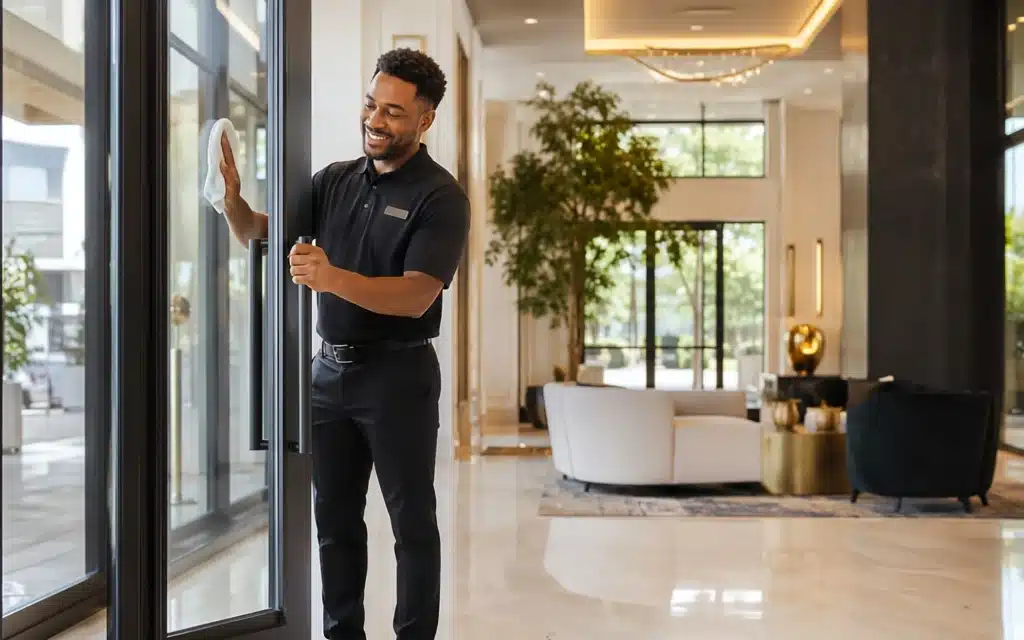
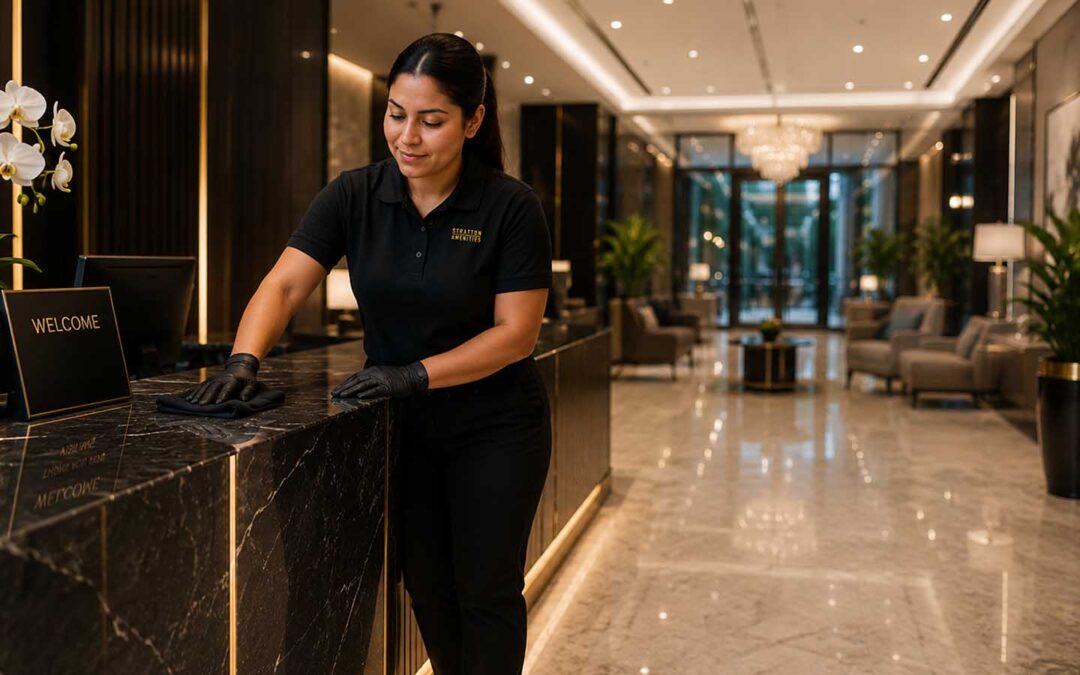
A building that looks pristine at 8am and disheveled by noon is a building running a transactional janitorial program. Day porter services, on-site cleaning professionals working during peak resident hours, ensure the lobby, mailroom, fitness center, and common areas reflect the property’s standards throughout the entire day, not just before residents wake up. In high-traffic properties in downtown LA or SoMa, this is not a premium add-on. It is what a well-managed building looks like.
Courtesy Patrol: From Security Function to Community Presence
Transactional courtesy patrol operates on a reactive basis, complete rounds, respond to incidents, file reports. Hospitality-driven courtesy patrol operates proactively: a visible, professional, friendly presence that makes residents feel genuinely secure without making them feel monitored. Officers who know residents by name, communicate warmly, and respond to concerns with both competence and care are doing something qualitatively different from a security vendor completing a checklist.
Valet: From Parking Service to First Impression
For luxury properties in dense urban markets, valet service is often the first physical interaction a resident has with the building each day. In a transactional model, valet staff park cars. In a hospitality-driven model, they’re brand ambassadors, polished, consistent, professional, and trained to make that daily micro-moment one that reinforces why the resident chose this building. On the West Coast, where luxury high-rises compete fiercely for the same resident profile, that daily first impression compounds into a retention advantage.
In-House vs. Outsourced: Why West Coast Operators Are Choosing Partners Over Payroll
The natural question for property managers evaluating this shift: can’t an in-house team be trained to operate this way?
In theory, yes. In practice, three structural realities make it exceptionally difficult on the West Coast.
The labor market doesn’t support it.
In San Francisco, Los Angeles, Seattle, and San Diego, finding hospitality-caliber candidates across multiple service roles simultaneously, and retaining them, requires an HR infrastructure that most property management teams simply don’t have. The markets with the highest resident expectations also have the tightest, most expensive labor pools.
Continuity is the product.
Residents don’t experience a staffing model, they experience the person who greets them every morning, the porter who keeps their lobby clean, the courtesy officer they recognize in the elevator. Outsourced amenity partners with dedicated training programs, deep staffing benches, and seamless coverage protocols deliver that continuity in a way that in-house teams, subject to turnover, sick days, and budget constraints, structurally cannot.
Consolidation reduces cost and complexity.
Managing separate vendor relationships for concierge, janitorial, valet, and courtesy patrol creates administrative overhead, accountability gaps, and inconsistent service cultures across functions. A single outsourced partner unifies all four under one leadership structure, one service philosophy, and one point of accountability, reducing management burden while raising the service floor across every resident touchpoint.
How Stratton Amenities Delivers Hospitality-Driven Staffing Across the West Coast
Stratton Amenities brings an integrated, hospitality-first staffing model to multifamily communities across Los Angeles, the San Francisco Bay Area, and the broader West Coast, combining concierge, janitorial and day porter, courtesy patrol, and valet services under one people-first philosophy.
Every Stratton Amenities professional is selected for temperament and attitude, not just technical skill, and supported by structured training programs that ensure consistency, continuity, and a service culture that residents feel from the first day of their lease through the last.
For property managers and HOA boards operating in West Coast markets, Stratton Amenities delivers:
- Integrated amenity staffing across all resident-facing functions, one partner, one standard, one point of accountability
- On-site leadership and oversight with transparent reporting and direct lines of communication with property management
- Customizable programs built around each community’s specific size, demographic, traffic patterns, and service expectations
- National infrastructure with genuine local presence, the training depth and staffing bench of a national company, applied with deep knowledge of LA, Bay Area, Seattle, and San Diego market dynamics
In West Coast markets where residents are paying a premium to live in communities that promise something better, the quality of your staffing model is one of the most consequential decisions you make. The properties winning in 2026 aren’t winning on amenities. They’re winning on the experience of living there every day.
Frequently Asked Questions :
Why are West Coast multifamily properties moving away from in-house staffing?
A combination of factors is driving the shift: structural labor shortages in coastal markets, elevated wages and benefits costs, high employee turnover in service roles, and rising resident expectations that demand a hospitality-level experience. Outsourced amenity partners offer trained staff, consistent service cultures, and seamless coverage that in-house hiring models struggle to sustain in West Coast markets.
What specific roles benefit most from a hospitality-driven approach in multifamily?
The highest-impact roles are those with the most resident-facing contact: front desk concierge, janitorial and day porter, courtesy patrol, and valet. These four functions collectively define how a resident experiences the building every day, making them the primary leverage points for a hospitality-driven service upgrade.
How does the Los Angeles market make staffing particularly challenging?
Los Angeles combines some of the nation’s highest labor costs with a diverse property landscape, from luxury high-rises in Downtown to garden-style communities in the Valley, and increasing competitive pressure as 32,000 units have come online since 2022. With rents flat and vacancy nudging higher, operators can no longer compete on concessions alone. Service quality and daily resident experience have become the decisive retention factors.
Why does hospitality-driven staffing matter specifically for San Francisco Bay Area properties?
The Bay Area’s resident base skews heavily toward high-income tech and AI professionals paying Class A rents in excess of $3,000 per month. These residents are highly selective, comparison-shop aggressively, and leave detailed online reviews. With downtown submarkets like SoMa and Mission Bay posting 10%+ rent growth in late 2025, the properties capturing and holding that demand are delivering a consistent, attentive, hotel-caliber service experience, not a transactional one.
Ready to bring hospitality-driven staffing to your West Coast community? Contact Stratton Amenities to build a program tailored to your property.