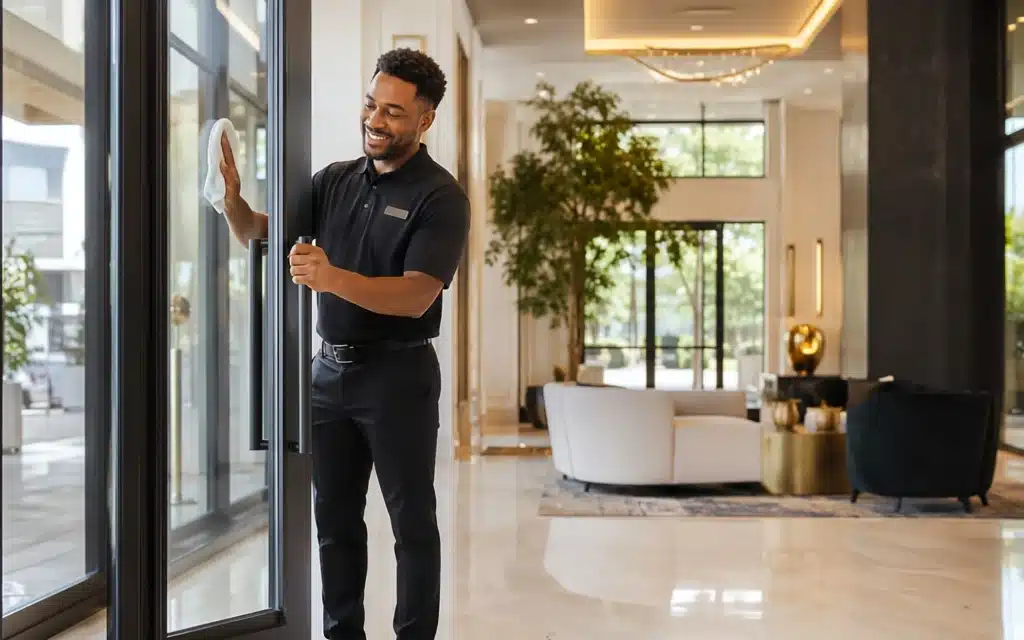
Picture this: your janitorial crew came through last night. The lobby was spotless at 7am. Floors gleaming. Elevators wiped down. Trash rooms cleared.
By 11am, the lobby mat is tracked with dirt. Someone left coffee spilled near the elevator. The mailroom has packages stacked haphazardly across the floor. A restroom is out of paper towels. None of it is dramatic. But every resident who walks past it registers the same thing: this building isn’t being taken care of.
That gap,between a building cleaned at night and a building that stays clean all day, is exactly what a day porter fills.
For property managers and HOA boards trying to understand whether day porter services make sense for their community, this guide breaks down what the role actually involves, how it differs from standard janitorial service, and the specific property types and scenarios where a day porter moves from nice-to-have to operationally essential.
Quick Answer: What Is a Day Porter in an Apartment Building?
A day porter is an on-site cleaning and facility support professional who works during business hours not after the building closes. Unlike nighttime cleaning crews that complete large-scale cleaning tasks after hours, day porters focus on maintaining cleanliness, order, and functionality in real time. In a multifamily context, this means continuously managing lobbies, elevators, common areas, restrooms, mailrooms, and any shared amenity space throughout the hours residents are actively using them.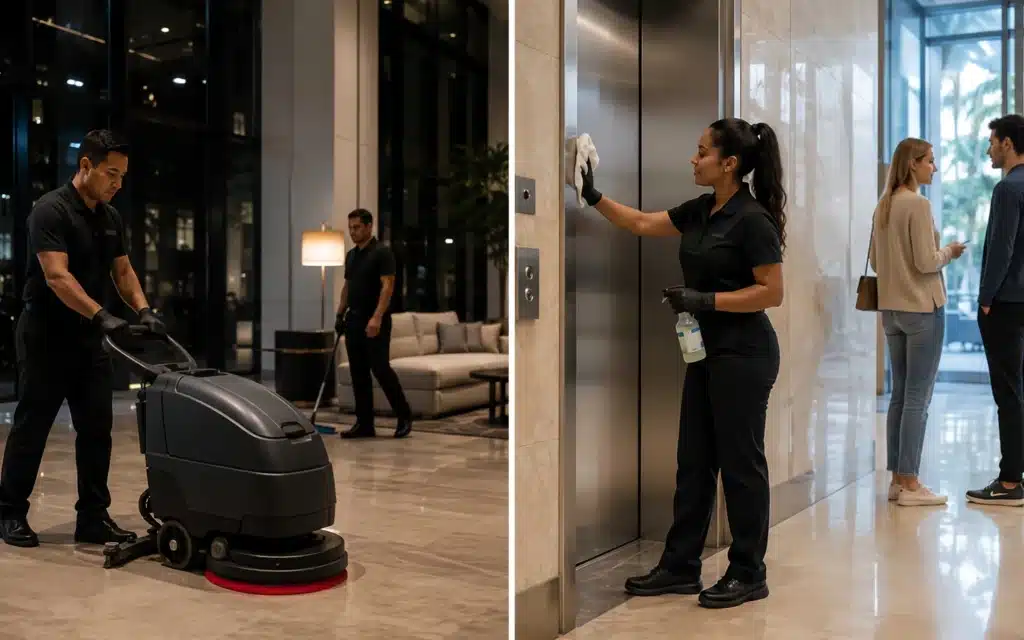
Day Porter vs. Janitorial Services: What’s the Difference?
The two roles are complementary not interchangeable. Understanding the distinction is key to building a cleaning program that actually works for a residential community. Janitorial services typically happen after hours or during non-peak times, focusing on deep cleaning and maintaining the overall cleanliness of a facility. Day porter services, on the other hand, are provided during business hours acting as a behind-the-scenes helper ensuring the property stays clean, presentable, and stocked throughout the day, especially during high-traffic times. Put simply:- Janitorial crews reset the building thorough, systematic, comprehensive cleaning when residents are asleep or away
- Day porters maintain the building continuous, responsive, visible upkeep during the hours residents are actually living in it
What Does a Day Porter Actually Do?
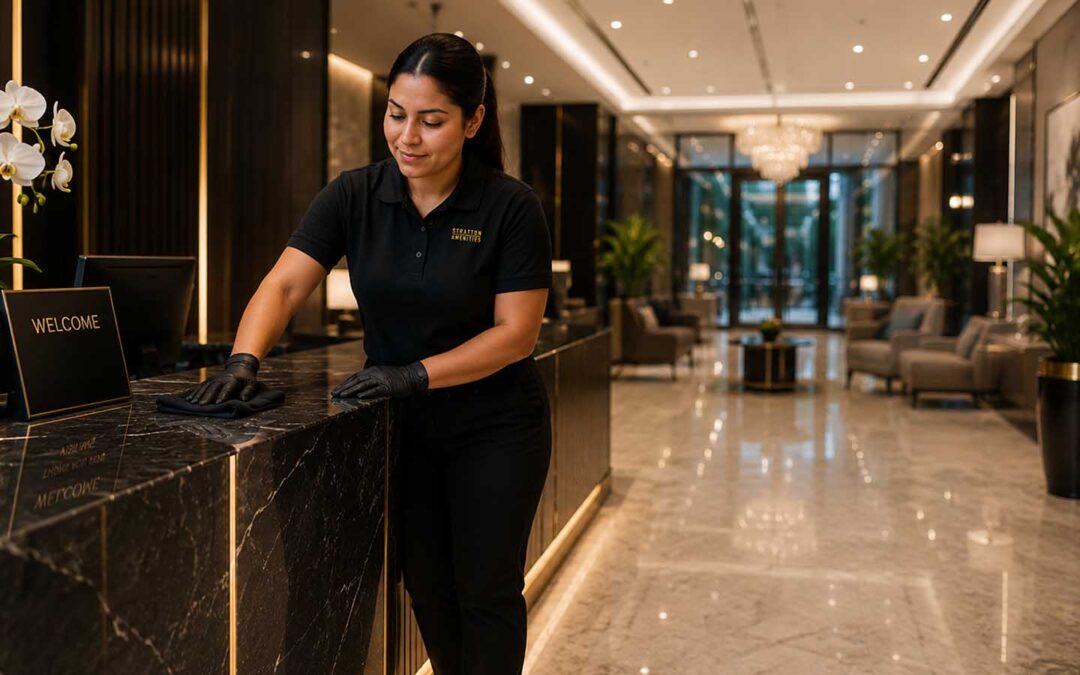
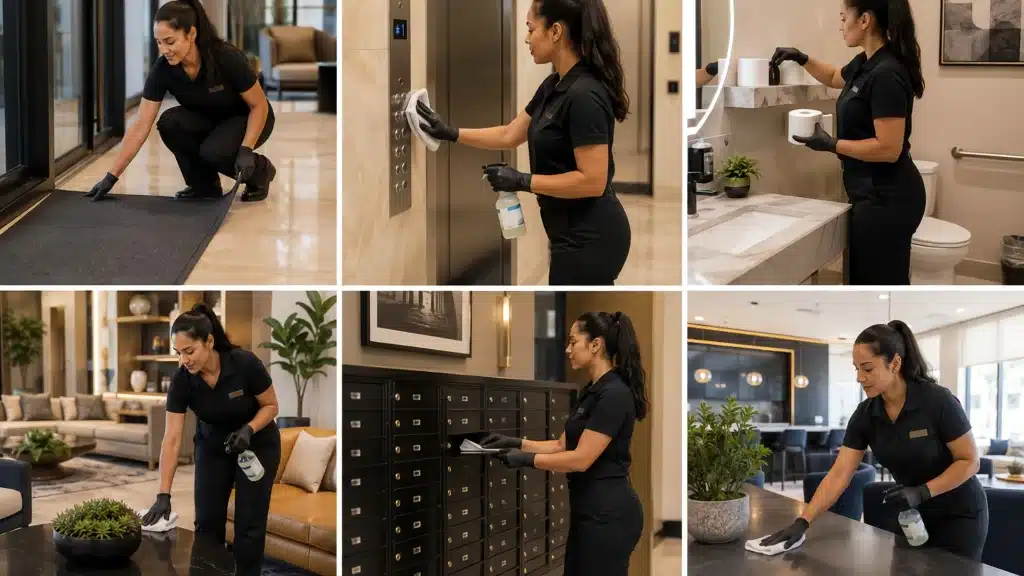
The day porter role is more dynamic and resident-facing than most property managers expect. Day porters work closely with property managers to ensure a property is consistently in excellent condition, playing a pivotal role in recognizing and addressing the various maintenance needs of a building. Their commitments are multifaceted and dynamic, extending well beyond traditional janitorial roles. In a multifamily or condo setting, a day porter’s typical responsibilities include: Lobby and entrance maintenance Continuous upkeep of the first impression: floors swept and mopped as needed, glass doors wiped, mats straightened, surfaces cleared. The lobby isn’t cleaned once. It’s maintained throughout the day. Elevator and corridor upkeep High-touch surfaces in elevators are disinfected regularly throughout the day. Corridors are monitored and addressed immediately when spills, debris, or tracked-in dirt appear. Restroom monitoring and restocking Amenity and common area restrooms are checked, cleaned, and restocked on a regular rotation during operating hours not left until a nightly crew arrives. Amenity space upkeep Fitness centers, pool decks, co-working lounges, and resident lounges see heavy use throughout the day. A day porter ensures these spaces are presentable and functional at every hour, not just in the morning. Trash room and refuse management Trash chutes, bin areas, and refuse rooms are monitored and cleared throughout the day to prevent overflow, odor, and the appearance of neglect. Spill and incident response When something goes wrong, a spill in the lobby, a mess near the elevator, a guest incident near the mailroom a day porter responds immediately rather than waiting for the next scheduled crew. Resident-facing presence A day porter can also serve as a liaison between property management staff and on-site custodial staff, bringing a specific focus and attentiveness that maintains the professional appearance of lobbies and other high-traffic areas while boosting satisfaction by keeping the building clean throughout the day. That last point matters more than it appears on a job description. A day porter in uniform, present and professional, signals to every resident who passes them that the building is being actively cared for. That signal has real value.
Why Building Cleanliness Directly Affects Your NOI
The connection between day-to-day cleanliness and bottom-line performance is documented, and it’s more direct than most property managers model in their operating budgets. Renters have made it clear that maintenance, security, and community appearance and cleanliness are far more important to them than anything else. placing tech-enabled lifestyle features, which property managers consistently rank as the top priority, at the bottom of their own priority list. That disconnect between what operators invest in and what residents actually value is where renewal decisions are made and lost. In 2024, maintenance-related complaints increased by 6.3%, with residents frequently citing response time and appearance in their online reviews. Delays and visible neglect aren’t just frustrating, they directly drive non-renewals. The financial math is straightforward. Replacing a single resident costs between $3,000 and $5,000 in advertising, vacancy loss, and make-ready expenses. In a 200-unit community, retaining just five additional residents per year through a stronger daily maintenance presence more than covers the cost of a day porter program, with margin to spare. And the reputational dimension compounds that math. Negative online reviews citing dirty elevators, unkempt lobbies, or overflowing trash rooms follow a property on Google, Apartments.com, and Yelp for years, suppressing tour bookings and leasing velocity long after the underlying issue has been addressed.Does Your Building Actually Need a Day Porter?
Not every property needs a day porter. The right answer depends on the building’s size, traffic patterns, resident profile, and the service standard the property is positioned to deliver. Here’s a practical framework for evaluating whether the role makes sense for your community. Your building almost certainly needs a day porter if: You have 150+ units. At this scale, the volume of daily foot traffic through lobbies, elevators, mailrooms, and common areas generates more mess and wear than a nightly crew can address in a single visit. The gap between the 7am post-cleaning state and the 7pm peak-traffic reality becomes visible, and residents notice. You operate amenity-rich common spaces. Fitness centers, resident lounges, co-working areas, pool decks, and rooftop spaces require continuous oversight during the hours they’re in use. A gym that hasn’t been wiped down since last night’s crew left by 6am is going to show it by noon. You are a luxury or Class A property. The rent premium a luxury property commands carries an implied service standard. Residents paying $2,500, $3,000, or $4,000 per month have seen five-star hotel lobbies. They are comparing their building’s common areas to that benchmark, consciously or not. A nightly-only cleaning program cannot maintain that standard consistently. You are in lease-up or a highly competitive submarket. Multifamily deliveries are projected at approximately 469,000 units in 2026, with lease-up competition persisting across many markets. In this environment, prospective residents touring multiple communities on the same day will walk away from the one that looked the least cared-for, regardless of unit finishes. Your online reviews mention cleanliness. If cleaning-related complaints have surfaced in resident reviews, the problem is structural, a nightly program isn’t keeping pace with the building’s usage. A day porter program addresses the root cause. Your on-site staff is being pulled into cleaning tasks. When leasing agents, concierge staff, or property managers are the ones responding to lobby messes or restocking restrooms, they’re not doing their jobs. A day porter restores those roles to their intended focus.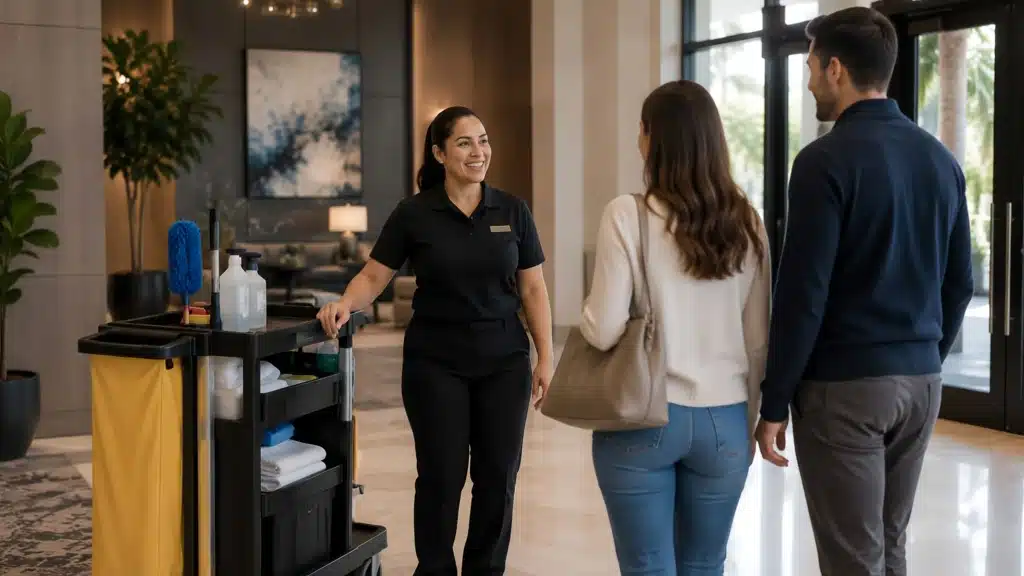
The Hospitality Dimension: Why the Right Day Porter Is More Than a Cleaning Role
In a multifamily setting, the day porter role carries something that a standard cleaning position does not: consistent visibility to residents. A janitor works after hours. Residents may never see them. But a day porter is present during the morning rush, the midday amenity hours, and the afternoon delivery surge. They are seen. They interact with residents. They are part of the daily experience of living in the building. This is why the hiring standard for a day porter in a luxury residential environment should be meaningfully different from a standard commercial cleaning hire. Day porters provide immediate, visible support that can significantly enhance tenant satisfaction, and underestimating the value of that visible cleanliness is one of the most common mistakes facility managers make. A day porter who greets residents by name, responds to requests promptly, and carries themselves with the same professionalism as the front desk concierge team is doing something qualitatively different from a day porter who keeps their head down and cleans to a checklist. Both keep the building clean. Only one reinforces the sense that the building is genuinely, attentively managed. This hospitality dimension is the difference between a cleaning program and a service program, and it’s the standard that the best multifamily day porter providers bring to every property they serve.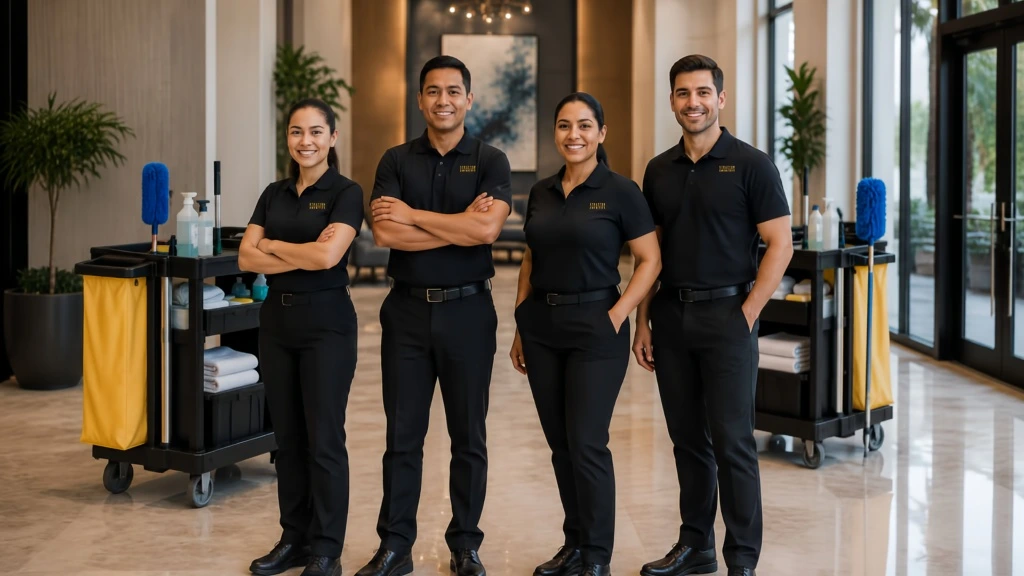
How Stratton Amenities Delivers Hospitality-Driven Staffing Across the West Coast
Stratton Amenities brings an integrated, hospitality-first staffing model to multifamily communities across Los Angeles, the San Francisco Bay Area, and the broader West Coast, combining concierge, janitorial and day porter, courtesy patrol, and valet services under one people-first philosophy. Every Stratton Amenities professional is selected for temperament and attitude, not just technical skill, and supported by structured training programs that ensure consistency, continuity, and a service culture that residents feel from the first day of their lease through the last. For property managers and HOA boards operating in West Coast markets, Stratton Amenities delivers:- Integrated amenity staffing across all resident-facing functions, one partner, one standard, one point of accountability
- On-site leadership and oversight with transparent reporting and direct lines of communication with property management
- Customizable programs built around each community’s specific size, demographic, traffic patterns, and service expectations
- National infrastructure with genuine local presence, the training depth and staffing bench of a national company, applied with deep knowledge of LA, Bay Area, Seattle, and San Diego market dynamics